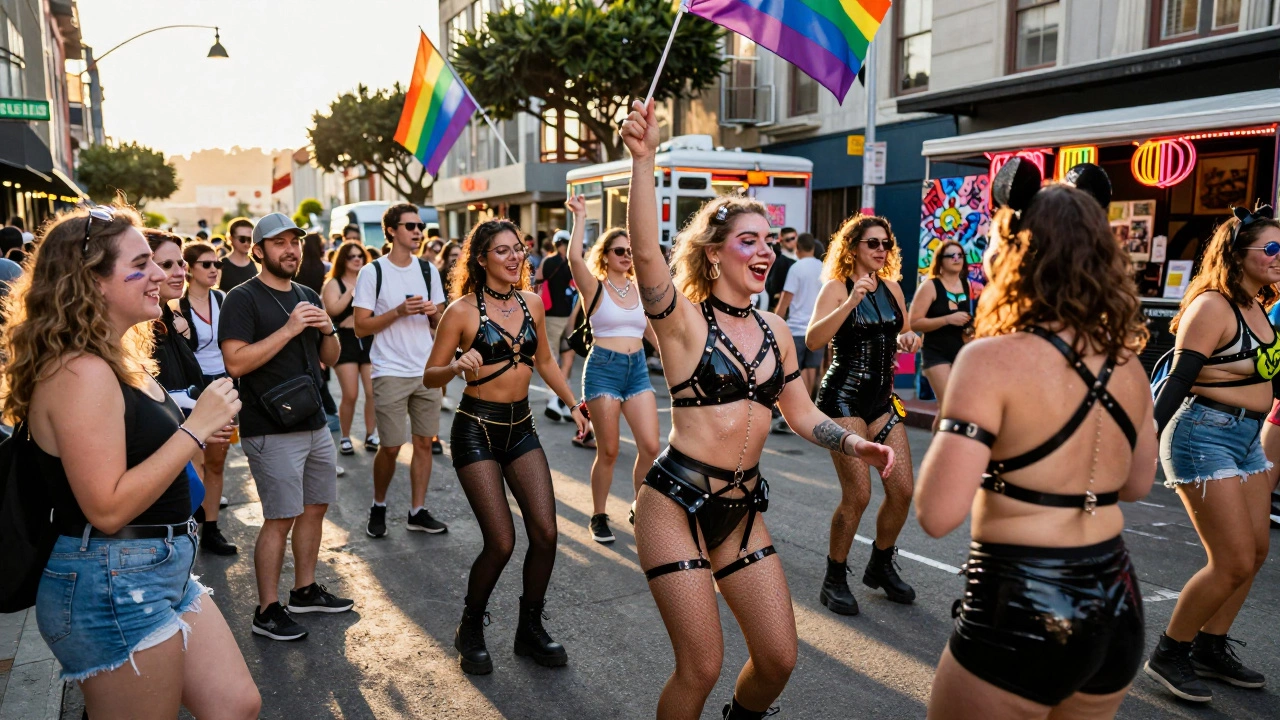
The Folsom Street Fair isn’t just a party. It’s a living, breathing manifesto. Every September, over 300,000 people flood the streets of San Francisco’s SoMa district-not to watch, but to participate. Leather harnesses, latex bodysuits, handcuffs as fashion accessories, and bare skin painted with glitter. No one’s hiding. No one’s apologizing. This isn’t about shock value. It’s about ownership. You show up as you are, or you don’t show up at all. And that’s the point.
Some people come for the music. Others for the food trucks, the art installations, or the community booths offering free STI testing and harm reduction supplies. A few wander past a vendor selling custom leather chaps and think about how different life could be if they weren’t afraid to say what they want. Maybe they’ve seen photos online-of people dancing under neon lights, kissing strangers, laughing with no shame. One woman scrolling through her phone last year stumbled on a photo of a couple in full gear, holding hands at the fair, and thought, That’s me. She booked a flight from Paris. She didn’t come for the tourist spots. She came because she’d read about the freedom here, and it made her wonder why she’d spent so long pretending to be someone else. She even looked up escort girl paris. not because she wanted to hire someone, but because she wanted to understand how far people would go to feel seen.
It Started With a Protest, Not a Party
The Folsom Street Fair began in 1984. Not as a celebration of kink, but as a response to fear. The AIDS crisis was ravaging the gay community. Politicians were silent. The media painted queer people as dangerous. So a group of leathermen and women organized a street fair to show that their sexuality wasn’t a disease, wasn’t shameful, and wasn’t going away. They didn’t ask for permission. They just showed up-with their gear, their music, their community. And they turned a block of Folsom Street into a declaration: We are here. We are alive. We are not afraid.
Thirty years later, the fair still carries that weight. It’s not just about sex. It’s about identity. About reclaiming space in a world that still tries to box people in. You’ll see fathers with their kids in strollers next to people in full bondage gear. You’ll see drag queens dancing beside men in harnesses. You’ll see elderly couples holding hands under rainbow flags. There’s no hierarchy here. No one gets to decide who belongs.
What You Won’t See on Instagram
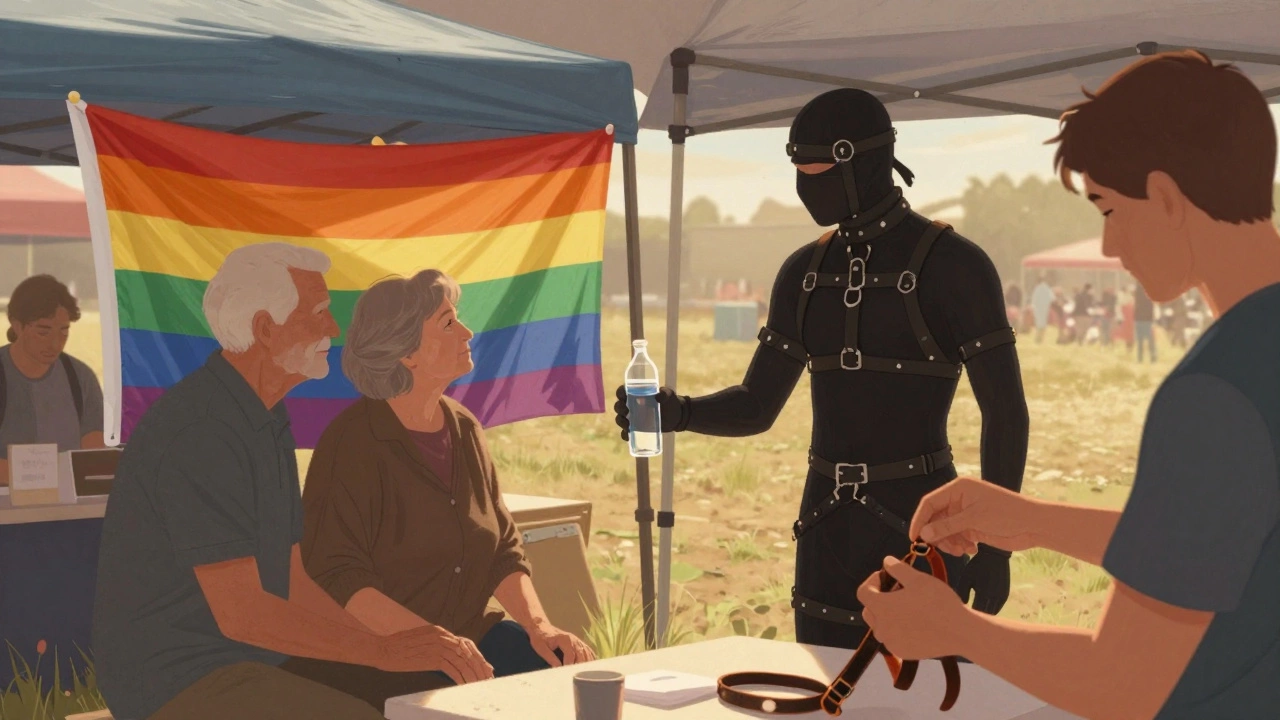
Most people only see the flashy photos. The corsets. The whips. The chains. But the real magic happens in the quiet corners. The guy who spends his whole day handing out water to strangers. The volunteer who fixes a broken harness for someone who can’t afford a new one. The woman who sits under a tent and listens to people tell her stories they’ve never told anyone else. This isn’t a carnival. It’s a sanctuary.
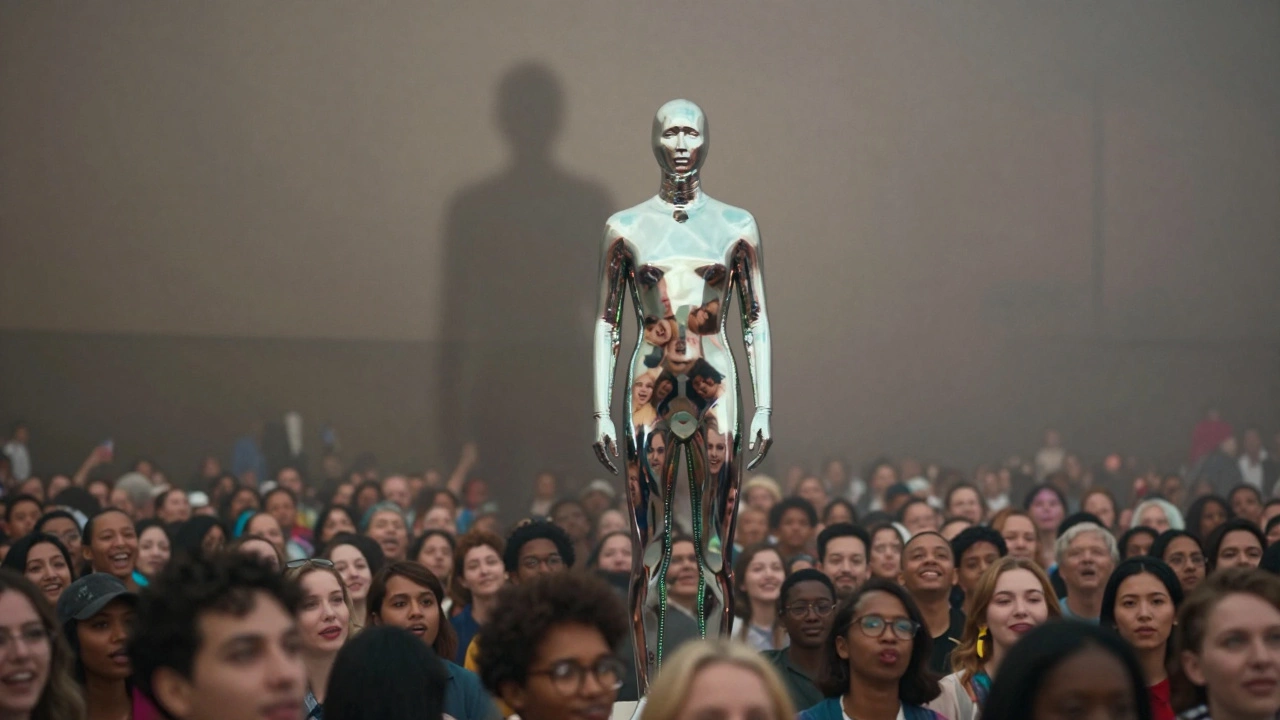
There’s no bouncer checking IDs. No one’s turned away for being too queer, too fat, too old, too disabled, too gender-nonconforming. The only rule? Don’t touch without consent. That’s it. Everything else is up to you. You can wear a full-body suit made of mirrors and dance until sunrise. Or you can sit on a bench and watch. Both are valid.
Why This Matters Beyond San Francisco
The Folsom Street Fair doesn’t exist in a vacuum. It’s part of a global movement-people saying, I’m not broken. I’m not wrong. I’m just me. In countries where same-sex relationships are still criminalized, where trans people are hunted down, where BDSM is pathologized, this fair becomes a beacon. People from Tokyo, Berlin, and Buenos Aires come here to remember what freedom feels like. They take photos, they talk to strangers, they leave a little piece of themselves behind-and carry a little piece of San Francisco home.
That’s why the fair keeps growing. Not because it’s trendy. But because it’s necessary. In a world that tells you to shrink, to quiet down, to fit in, Folsom says: Expand. Speak up. Be loud.
What You Should Know Before You Go
If you’re thinking about going, here’s what actually matters:
- You don’t need to dress up. Seriously. Most people don’t. You’ll see jeans and t-shirts just as often as leather and lace.
- Bring water. And snacks. And sunscreen. It’s a long day, and there’s no shade.
- Respect boundaries. If someone says no, back off. No exceptions.
- Don’t take photos of people without asking. Even if they look like they’re posing. It’s not a photo op.
- Leave your judgment at the door. You don’t have to understand it. You just have to let it exist.
The fair is free to attend. No tickets. No VIP passes. No exclusivity. That’s the point.
The Real Lesson of Folsom
The most powerful thing about the Folsom Street Fair isn’t the outfits. It isn’t the music. It isn’t even the sex.
It’s the quiet moments. The person who walks in nervous, head down, and by the end of the day is laughing with a stranger who just gave them a hug. The teenager who comes with their parent, unsure if they’ll be accepted-and leaves with their arm around someone who told them, You’re not alone.
That’s the real magic. It’s not about what you wear. It’s about who you become when you stop pretending.
One guy told me last year, I came here to see if I was the only one who felt this way. Turns out, I was surrounded by people who’ve been feeling it for decades.
You don’t need to be a leatherman. You don’t need to be queer. You don’t need to be into BDSM. You just need to be human. And sometimes, that’s enough.
And if you ever find yourself wondering if it’s safe to be yourself? Go to Folsom. Watch. Listen. Feel. Then decide.
Sex escort paris, after all, isn’t just a phrase you search for out of curiosity. It’s a whisper of a deeper question: Can I be free? And if so, how?
Escort girl paris. Not because you want to buy something. But because you want to understand what freedom looks like when it’s not hidden.
 What is the purpose of homologation rules in motorsport?
 Greater Manchester Police Clears Angela Rayner in Electoral Misrepresentation Inquiry
 Can one simultaneously be feminist and MRA?
 Aberdeen Council Approves 200+ E-bikes for Spring 2026 Launch Amid Winter Transport Chaos
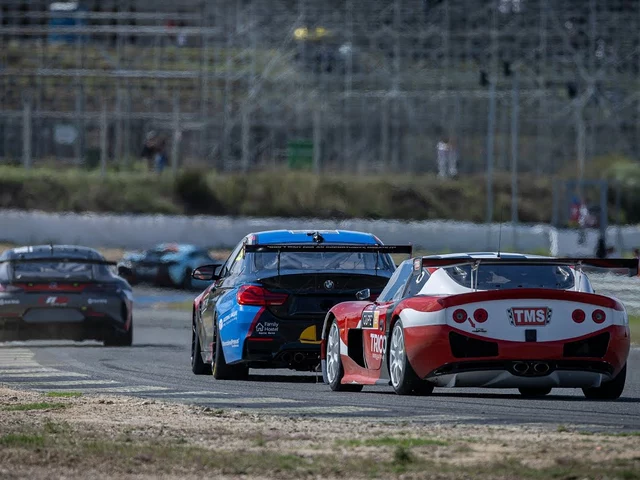 What does G mean in racing?